ENVIRONMENTAL HEALTH
PRESS RELEASES
Featured






ENVIRONMENTAL HEALTH
Supreme Court ruling for Bayer in Monsanto v. Durnell limits state-law cancer-warning lawsuits against pesticide manufacturers by holding that federal pesticide-labeling law preempts certain failure-to-warn claims — preventing states from protecting their own citizens.
Upcoming Bayer Supreme Court case comes as growing body of scientific research links glyphosate to cancer and other chronic diseases, and as new evidence shows that cancer rates are rising among young people across the U.S. Corn Belt.
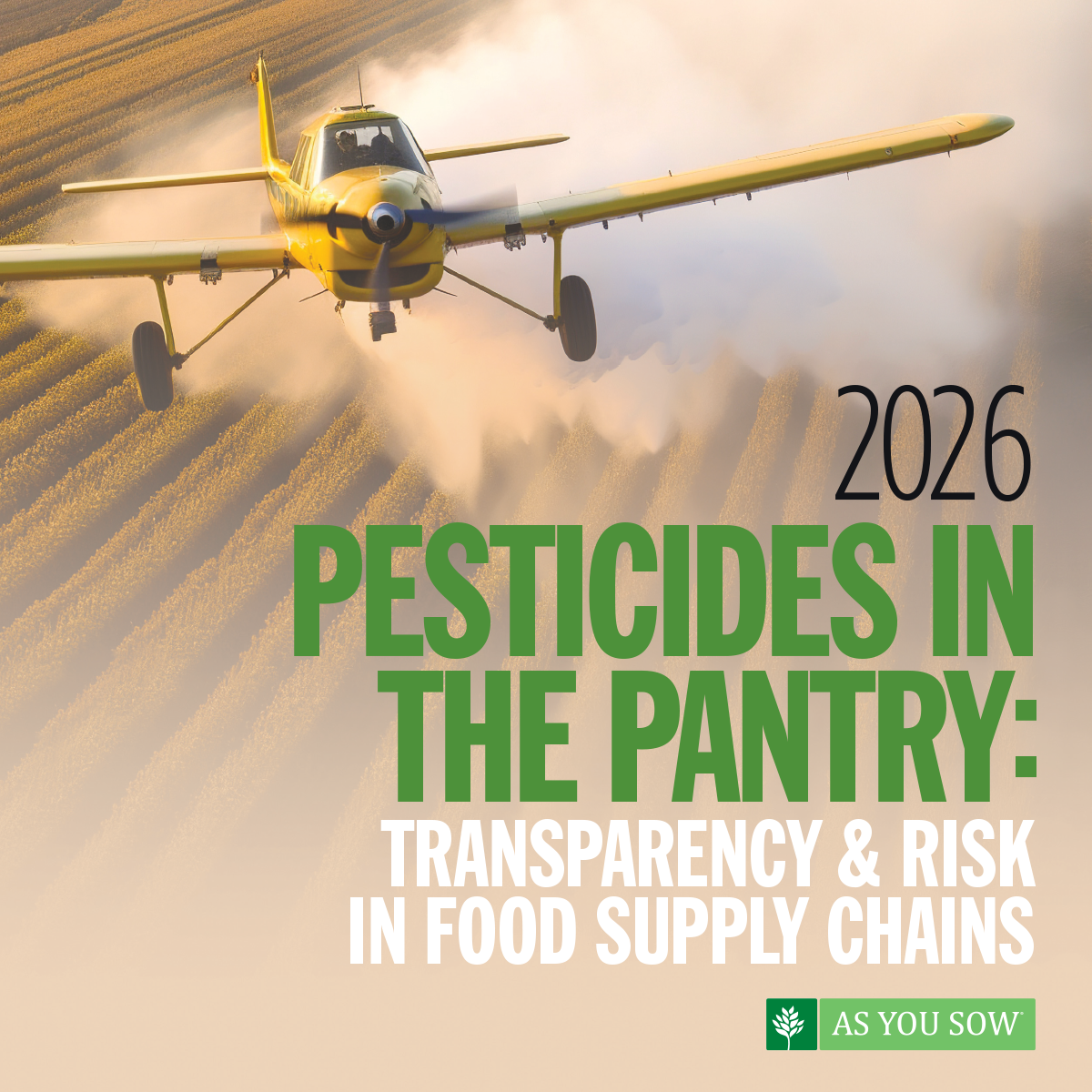
As You Sow released its updated Pesticides in the Pantry scorecard, revealing that major food manufacturers have regressed on pesticide reduction practices and disclosure.
A prominent scientific journal recently retracted a landmark study claiming that glyphosate, the active ingredient in the herbicide Roundup, is safe for human health. There remains substantial research and evidence linking glyphosate to cancer exists across a range of studies.
A Washington Post study underscores risks highlighted by a recent report and shareholder resolutions by As You Sow urging large food companies to assess and disclose pesticide and fertilizer use making farming communities and farm workers sick.
General Mills released voting results from its 2025 Annual General meeting showing 28% support for a pesticides disclosure proposal filed by shareholder representatives As You Sow and Mercy Investment Services.
A new report by As You Sow grades 20 major food companies on the quality of their regenerative agriculture programs and finds that a majority failed to implement key components necessary to achieve regenerative outcomes.
Today, Plaintiffs Larry Lee and As You Sow reached a settlement with Amazon concluding a nearly decade-long lawsuit addressing the sale on Amazon.com of brightening and lightening skin creams containing mercury.
Yesterday, The Guardian reported on the widespread use of PFAS in U.S. pesticides—information previously denied by the Environmental Protection Agency—bringing a new level of attention to PFAS in the U.S. food system. PFAS, also known as “forever chemicals,” have received growing consumer, media, and regulatory attention because of their linkage to cancer, kidney disease, liver problems, immune disorders, and other health and environmental impacts.
In a first-of-its-kind study, researchers at the University of California, Berkeley discovered several toxic metals in 30 tampons across 18 product lines from 14 major tampon brands, fueling widespread doubt about the safety of this commonly used product and their manufacturers.