
2026 From the Ground Up:
Transparent Pathways to Regenerative Food Systems
Regenerative agriculture is at an inflection point. New Policies, funding opportunities, certification programs, and scientific findings are shaping the movement's direction and outcomes. Major food companies are continuing to expand their regenerative programs, but critical gaps remain, hindering their ability to achieve the full range of regenerative outcomes. In addition, a lack of universal regenerative agriculture standards and regulations makes it difficult for investors to measure the success of companies’ regenerative programs.
This report benchmarks major food manufacturers and suppliers on their regenerative agriculture programs, policies, and goals, providing a pathway for investors to assess company performance and long-term value. The scorecard grades 19 major food companies on 15 key performance indicators designed to assess the companies’ regenerative agriculture strategies and disclosures, display the industry’s overall performance, distinguish leaders from laggards, and highlight notable practices. Company scores are based on a thorough review of publicly available information, including companies’ published reports, webpages, and press statements.
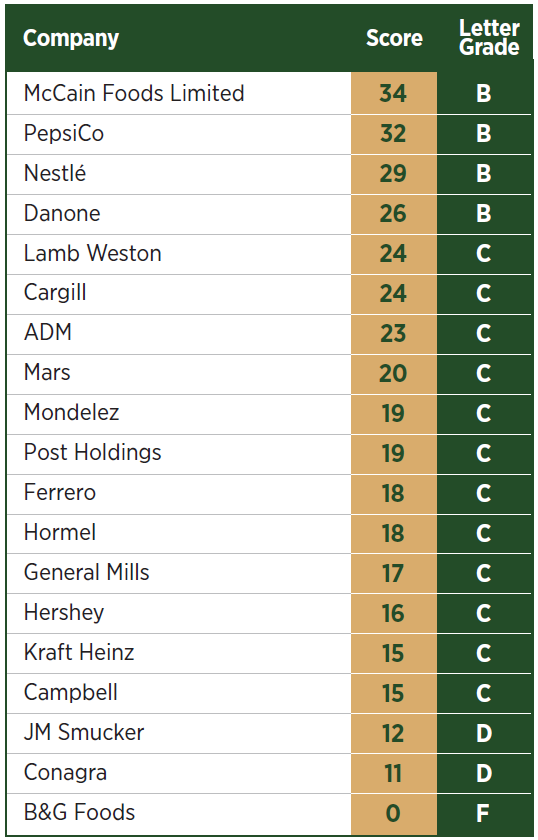
RESULTS:
The following 19 companies are included in this review (listed alphabetically): Archer Daniels Midland (ADM), Bloch & Guggenheimer (B&G) Food Inc., The Campbell Company, Cargill, Conagra Brands Inc., Danone, Ferrero, General Mills Inc., The Hershey Company, Hormel Foods Corporation, The J. M. Smucker Company, The Kraft Heinz Company, Lamb Weston Holdings Inc., Mars Inc., McCain Foods Limited, Mondelēz International Inc., Nestlé, PepsiCo Inc., and Post Holdings Inc.
Each company was given the opportunity to review the information compiled in this report and provide additional information or clarification.
Scorecard questions were developed to elicit key information about regenerative agriculture in practice across supply chains. Questions focus on transparency around companies’ regenerative agriculture goals and intended outcomes, measurement and verification systems for tracking outcomes, progress toward goals, and whether companies provide direct support for farmers and the regenerative transition at large.
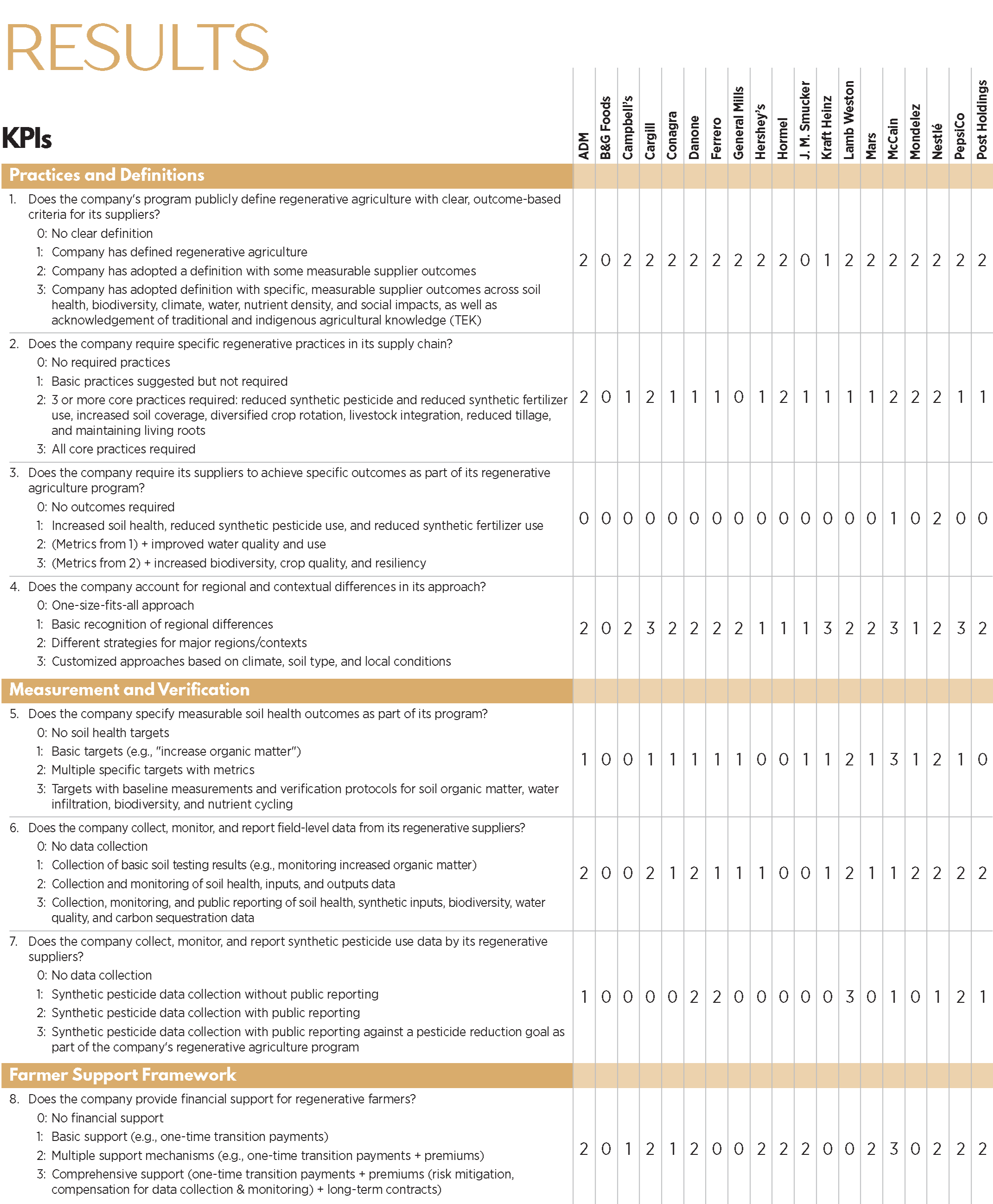
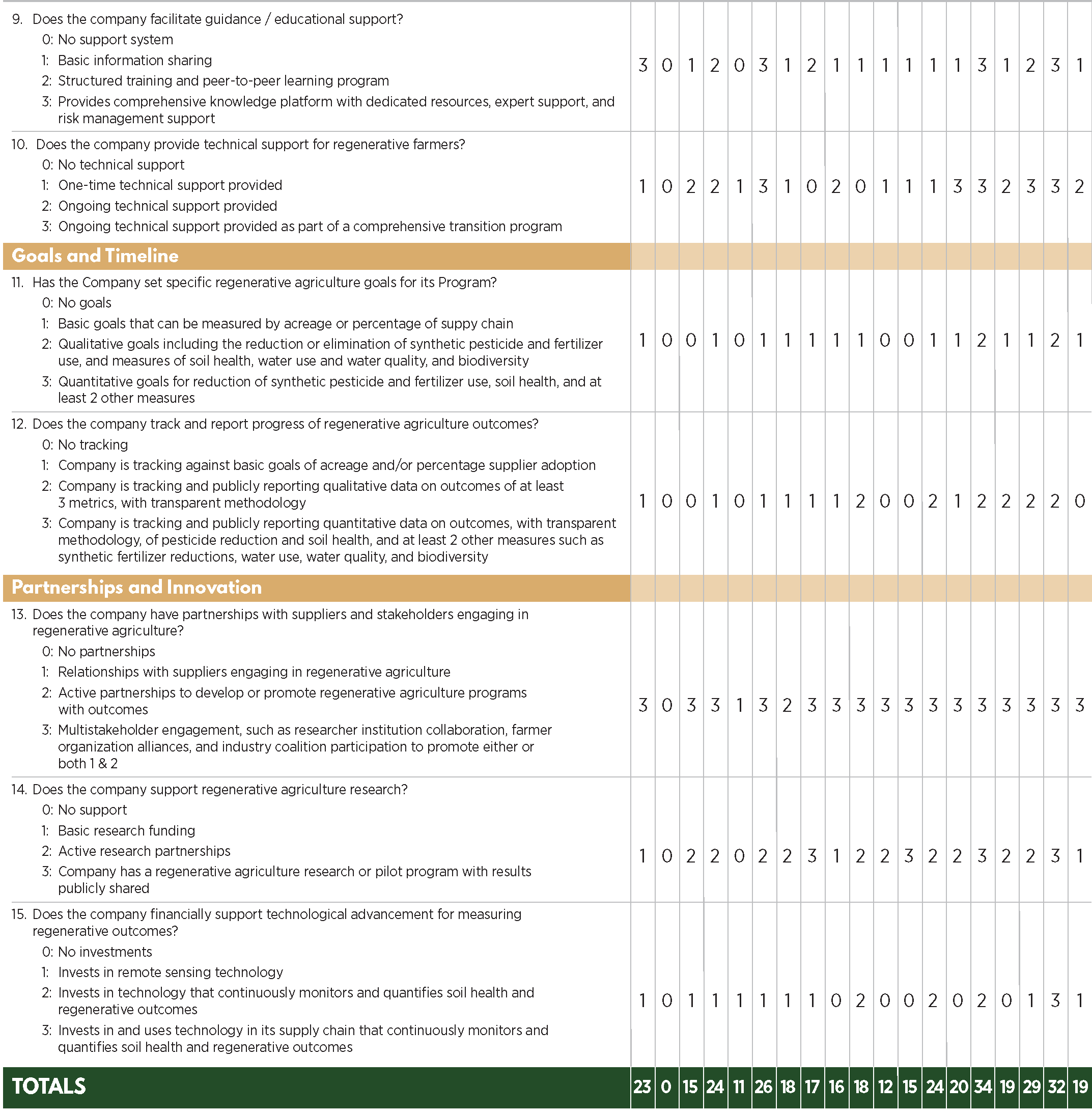
All scores reflected are of the most up-to-date data.