Climate and Energy Blog Posts
Featured


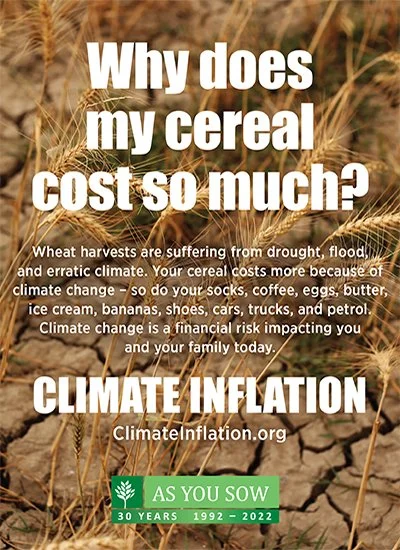



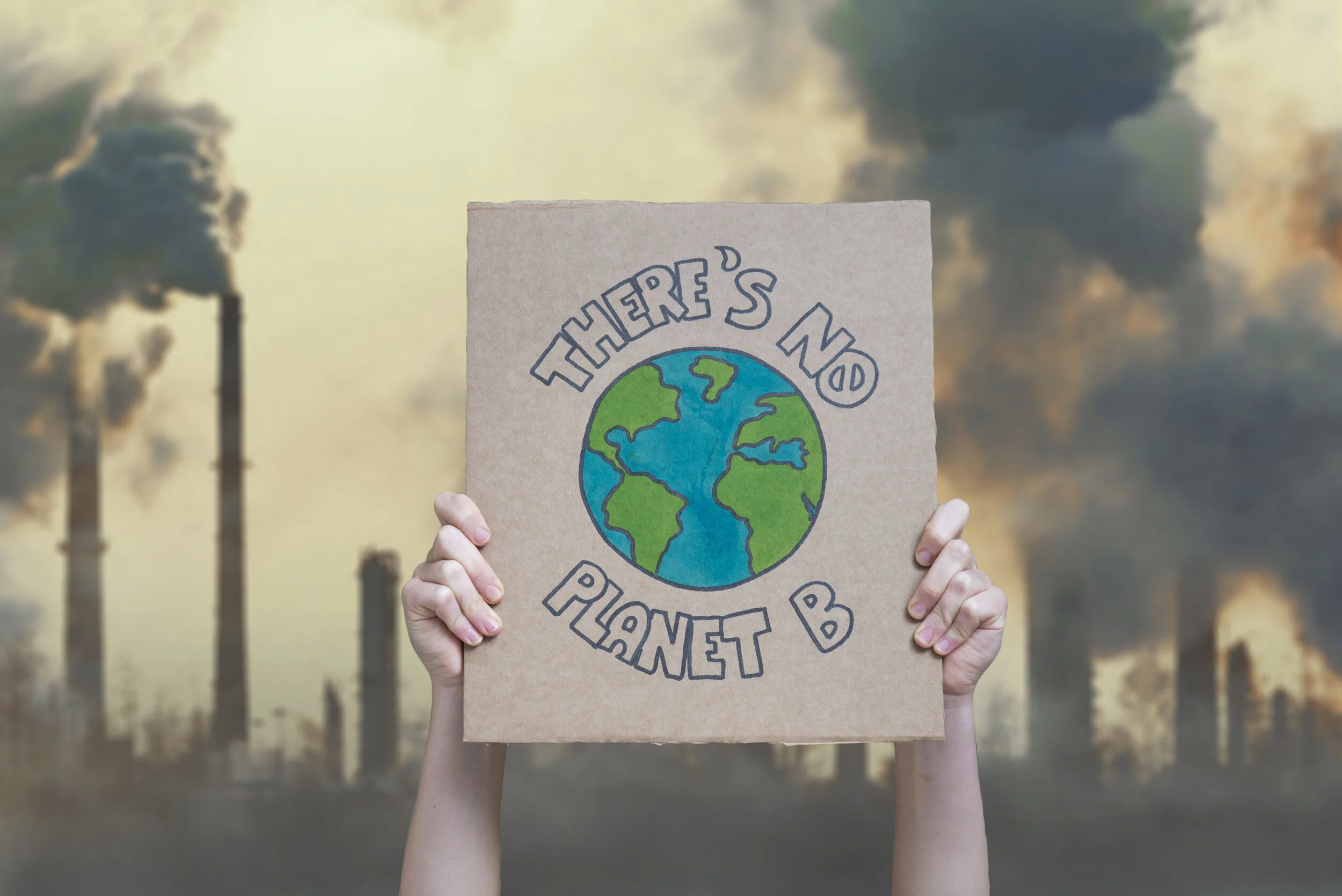





This proposal calls on Alphabet’s 401(k) team to protect its employees’ life savings from the economic consequences of climate change. Though Alphabet’s climate goals acknowledge climate risk, shareholders and employees ask Alphabet to address retirement assets invested towards climate related financial risks and offer better, climate-safe investment options.
We have gained so much collectively from the hard-won battles of organized workers. This week was International Workers' Day, also known as May Day, and As You Sow invites you to join us in celebrating working people and their achievements. Not one of the companies we engage could succeed without the labor of their workers. From cashiers to software engineers, wage workers are the backbone of our economy. Workers have propelled these companies to fantastic financial success.
Aside from the very real and immediate risks to human health and safety inflicted at landfall, hurricanes are also making people inhabiting these areas more vulnerable. Families with houses in Florida, along the Gulf, and even the West Coast (I wrote this as I hunkered through yet another California atmospheric river) are experiencing a new phenomenon known as “climate uninsurability.”
The emissions reductions we can achieve over the next decade will make a crucial impact on minimizing the worst dangers of a 1.5°C climate reality. Investors expect companies to develop transition pathways that drastically reduce the accumulation of greenhouse gases in the atmosphere.
Global bodies such like the Intergovernmental Panel on Climate Change and International Energy Agency are emphatic about the urgent need for transparent, immediate, and ambitious decarbonization of the oil and gas industry.
Employees’ investments in 401(k) plans generally represent a significant portion of their life savings. Microsoft has a duty to address the growing risk that climate change poses to pension fund assets, now, and in the future.
Employee investments in 401(k) plans generally represent a significant portion of their life savings. Campbell’s has a duty to address the growing risk that climate change poses to pension fund assets, now, and into the future.
Andrew Behar, CEO of As You Sow, joins Casey Hogue, the host of Darts in the Dark Podcast, to discuss the history of As You Sow and its mission, conscious consumerism, the 4th industrial age, and more.
In an October 2022 episode of Voice of America: Africa News Tonight, Andrew Behar, CEO of As You Sow was interviewed about climate inflation. He explained that the root cause of current inflation is extreme weather . . .
Danielle Fugere, president of As You Sow, Billy Gridley, director of the Investor Network at Ceres, and Tim Dunn, investment professional and founder of Terra Alpha Investments, discuss the actions investors and companies are taking to meet net-zero targets.
This resolution, requesting an annually updated climate transition report, provides the opportunity for Booking Holdings to establish a comprehensive plan to respond to climate change and reduce greenhouse gas emissions.
The information requested will help investors assess the extent of the company’s exposure to plastic pollution and encourage it to step up and match its peers by committing to significant cuts in plastic use.
To make up for lost demand, Big Oil is allocating significant resources to boost production of petrochemicals – especially plastics. This Hail Mary movement to increase plastics production faces a significant and growing landscape of risks.
Power utilities are at a juncture where they can continue to slow climate action with regressive lobbying or instead support Paris aligned policy and take advantage of opportunities inherent in the clean energy transition.
Proposal #3 requests disclosure on whether General Electric will rise to the occasion and meet the criteria of the Net Zero Indicator as laid out in the Climate Action 100+ Net Zero Company Benchmark or, if not, why not.
We are engaging over 100 companies and escalating by filing 73 shareholder resolutions on a range of critical issues. We are calling for a commitment of absolute cuts in the use of plastic packaging . . .
Andrew Behar, CEO of As You Sow, teamed up with Illinois Environmental Council and its affiliates, elected leaders, and other experts to offer educational sessions about the issues facing our environment, food systems, infrastructure, and good governance.
Tisha Schuller sits down with Danielle Fugere, President of As You Sow to learn about shareholder activism from the activist perspective. Shareholder resolutions are increasingly successful in pushing oil and gas companies to address climate concerns on activist terms.
In early May, French company Total, became the latest investor-owned oil and gas company to come out with an ambitious-sounding climate announcement. Total stated its support for the “goals of the Paris Agreement” and an intent “to be consistent with these goals . . . with a view for Total to get to net zero by 2050.”
Without a doubt, electric utilities have made significant progress in recent years in taking actions to reduce the sector’s impact on the climate crisis. Power sector companies are moving away from coal, setting net-zero or other substantial greenhouse gas emission reduction targets.
The window of opportunity to prevent catastrophic climate change is narrowing. The world is already experiencing harmful impacts surpassing earlier projections, and such harms will only increase as “business as usual” emissions continue.
BlackRock CEO Larry Fink’s 2020 annual letter sounds fantastic. It declares that the world’s largest asset manager will prioritize climate risks in investing. It acknowledges that “Climate change has become a defining factor in companies’ long-term prospects.
In recent months, the Green New Deal has sparked a movement centered on the need for bold action on climate. So what is this Green New Deal and why are investors supporting it?
As You Sow is lucky enough to be based in Oakland, California. When Gov. Jerry Brown announced that our neighbor San Francisco would host a Global Climate Action Summit, our ears perked up.
Methane, which has approximately 86 times the global warming potential of carbon dioxide over a 20-year period, is the main component of natural gas. Emissions of this potent climate forcer occur throughout the oil and gas supply chain. A recent EDF study demonstrated this problem could be 60% worse than previously thought.