2026 Pesticides in the Pantry:
Transparency & Risk in Food Supply Chains
A Decade of Research. Still Waiting for Results.
Since 2017, As You Sow has tracked the food industry's relationship with synthetic pesticides, from our foundational Roundup Revealed report through four successive editions of Pesticides in the Pantry. Over that period, we have benchmarked 17 major food manufacturers, and with each new publication we have raised the bar for what genuine accountability looks like. Most of the industry has consistently failed to clear it.
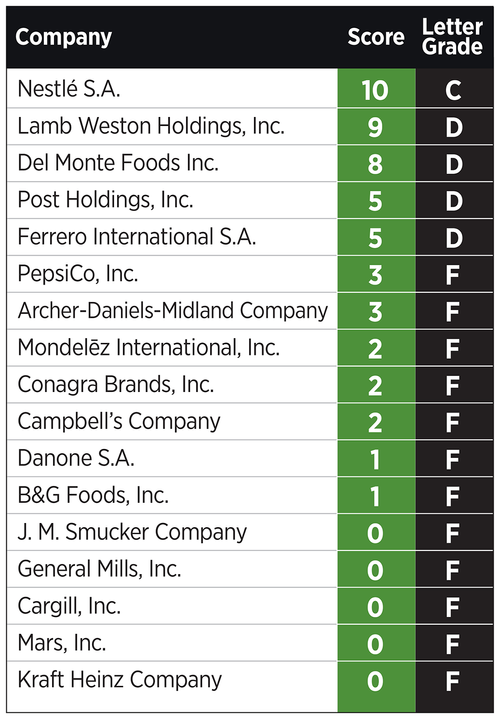
This year, major food companies continue failing to address pesticide risk in their supply chains. Notably many companies are turning their backs on previous pesticide reduction commitments, disclosures, and practices. Meanwhile, chronic health conditions associated with pesticide exposure, like Parkinson's and cancer, are on the rise.
Current failing federal pesticide regulations and policies also contribute to the increase in pesticide-related health impacts. As pesticide regulations continue weakening, investors, consumers, and stakeholders look to major food companies to fill the gaps and support pesticide reduction practices that protect human and environmental health.
About This Scorecard
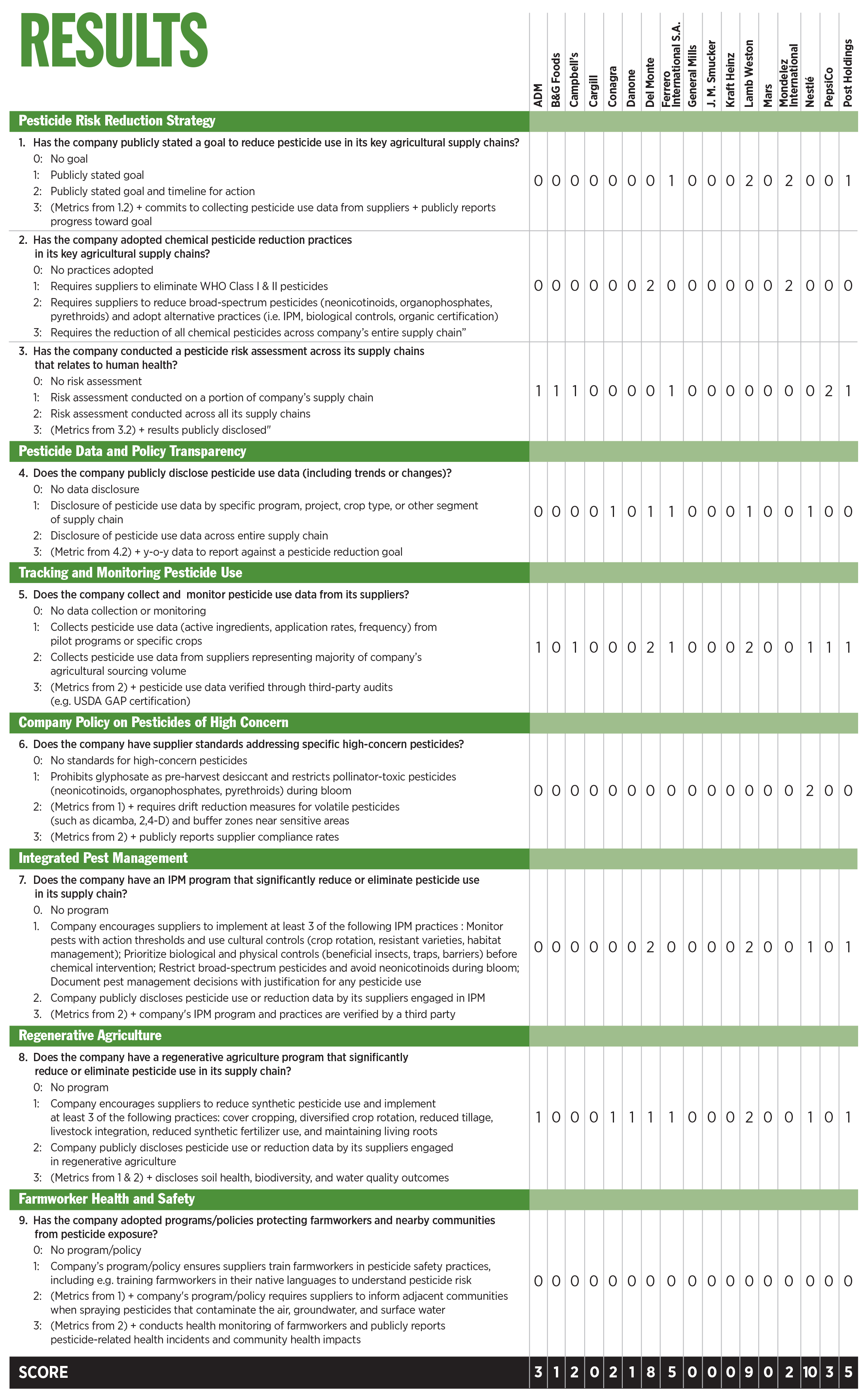
This scorecard benchmarks major food manufacturers and suppliers on their adoption of practices to measure and mitigate harm and risks related to the use of synthetic pesticides in agricultural supply chains. In scoring a set of questions related to pesticide-related company strategies and disclosures, the report provides a picture of the industry's overall performance, distinguishes leaders from laggards, and highlights notable practices.
For this report, 17 major food companies were scored on a total of 9 multitiered key performance indicators. Company scores are based on a thorough review of publicly available information, including companies' published reports, webpages, and press statements. In the case of international companies, U.S.-specific information was used where available; if the company did not clearly differentiate between U.S. and global policies, the latter were reported.
Companies' scores reflect an industry-wide shift away from the promotion of pesticide reduction practices and reporting. The majority of companies' scores decreased, with only 4 companies receiving a higher score than previous years. The median company grade was, again, an F.