
2026 Pesticides in the Pantry:
Transparency & Risk in Food Supply Chains
Policy, Regulation & Litigation
Last Updated: February 2026
The 2026 Farm Bill: Conservation, Conflict & Consequences
The Farm Bill is the nation's most comprehensive food and agriculture legislation, renewed by Congress approximately every five years. It shapes federal policy on the farm safety net, nutrition assistance, rural development, and—critically—conservation on private lands. The Farm Bill represents the single largest federal investment in conservation, providing farmers, ranchers, and landowners with financial and technical assistance to protect soil health, water quality, and wildlife habitat.
On February 13, 2026, House Agriculture Committee Chairman Glenn Thompson (R-PA) released the Farm, Food, and National Security Act of 2026 (H.R. 7567), with markup beginning February 23. Republican leadership aims for a floor vote before Easter; the current extension expires September 30, 2026. (Land Core, February 2026)
Why This Farm Bill Is Different
Last summer's budget reconciliation bill already addressed the most expensive Farm Bill priorities—commodity subsidies and crop insurance—paid for by cutting SNAP food assistance by over $200 billion. This "Farm Bill 2.0" covers what remains: rural development, research, and conservation programs.
For the first time in over 50 years, the traditional coalition pairing farm programs with nutrition assistance has been broken. House Agriculture Ranking Member Angie Craig (D-MN) has indicated it would be "very difficult, if not impossible" to support the bill as written, citing "poison pills" including protections for pesticide manufacturers. Meanwhile, American farmers face their worst economic conditions in a generation, with over $50 billion in losses over the last three crop years. (American Farm Bureau Federation)
Conservation Programs: What's in the Bill
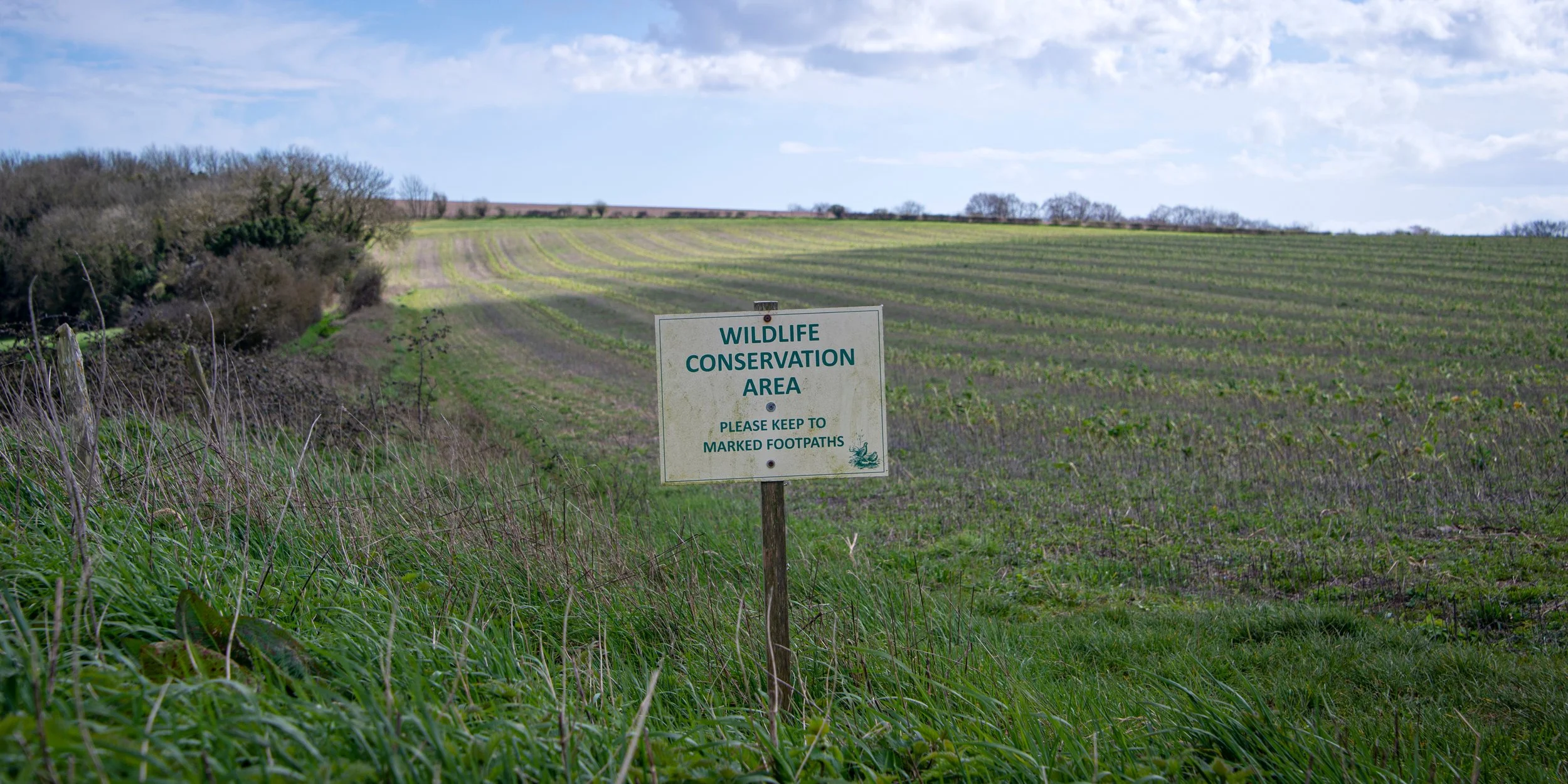
The Conservation Title proposes updates to USDA's major conservation programs. These programs are chronically oversubscribed—EQIP and CSP have historically had to turn away three-fourths of applicants due to insufficient funding. (American Farmland Trust)
The bill includes a new program (Sec. 2302) to match federal funding for state and tribal soil health programs—a priority championed by American Farmland Trust. Many states fund purchases of soil health equipment that NRCS does not cover. AFT calls this "a crucial step forward" that would incentivize greater state and tribal conservation investments. (American Farmland Trust)
Section 10205 would require uniform pesticide labels nationally, preventing states and local governments from requiring health warnings beyond EPA-approved labels—including cancer warnings. It would also overturn state and local laws restricting pesticide use near schools and parks, and shield manufacturers from liability.
This provision resurrects language previously removed from FY 2026 appropriations after opposition. CropLife America, representing the pesticide industry, praised its inclusion. (C&EN, Waterkeeper Alliance)
Glyphosate: Executive Action, Litigation & Corporate Strategy
Trump Executive Order Declares Glyphosate a "National Security" Priority
On February 18, 2026, President Trump signed an executive order invoking the Defense Production Act to boost domestic production of glyphosate-based herbicides, declaring them "central to American economic and national security." The order extends liability protections to domestic producers—making it harder for communities harmed by contamination to hold chemical companies accountable. (White House, Waterkeeper Alliance)
The order has drawn sharp criticism from "Make America Healthy Again" supporters promised pesticide reform. EWG President Ken Cook called it "a bigger middle finger to every MAHA mom." HHS Secretary Robert F. Kennedy Jr.—who built his profile suing over Roundup health harms—publicly backed the order. (EWG, February 2026)
Bayer Proposes $7.25 Billion Settlement
One day before Trump's executive order, Bayer proposed a $7.25 billion class action settlement to resolve current and future claims that its glyphosate-based herbicides cause cancer. The settlement would cover those diagnosed with non-Hodgkin lymphoma before February 17, 2026, plus those diagnosed within 16 years after court approval. (STAT News, The New Lede)
Sources: STAT News, DrugWatch, Lawsuit Tracker
Supreme Court Case: Decision Expected June 2026
The Supreme Court will hear Monsanto Co. v. Durnell, which asks whether federal pesticide labeling law preempts state failure-to-warn claims when the EPA has not required a cancer warning. Oral arguments: April 27, 2026. (Progressive Farmer)
- If Bayer wins: Could end state-level Roundup litigation and shield pesticide manufacturers from future failure-to-warn lawsuits.
- If plaintiffs win: Confirms individuals' right to hold companies accountable for failing to warn of health risks.
EPA's Regulatory Blind Spots
Pesticide Mixtures: The Science EPA Ignores
EPA evaluates pesticides one chemical at a time—ignoring how multiple pesticides interact. A 2025 Nebraska study in GeoHealth examined 32 pesticides and 2,512 childhood cancer cases in a state with among the highest childhood cancer rates in the country. (Taiba et al., GeoHealth, 2025)
- 36% increase in childhood brain and central nervous system cancers
- 23% increase in childhood leukemia
- 30% increase in overall childhood cancer
Key pesticides driving risk: dicamba, glyphosate, and paraquat. (Taiba et al., GeoHealth, 2025; Beyond Pesticides)
PFAS "Forever Chemicals" in Pesticides
EPA has approved nearly 70 PFAS-containing pesticides. In 2025, the Trump EPA finalized two more. PFAS don't break down and accumulate in both the environment and human body, linked to immune suppression, cancer, and reproductive harms. (EWG, December 2025; Beyond Pesticides)
Source: Beyond Pesticides, December 2025
Paraquat: 70 Countries Banned It; EPA Approved It for 15 More Years
Despite evidence linking paraquat to Parkinson's disease, EPA approved the herbicide for another 15 years in 2021. When EPA issued its 2024 review, scientists discovered the agency had failed to review 90 new studies submitted by the Michael J. Fox Foundation linking paraquat to Parkinson's. (Michael J. Fox Foundation, 2024)
- Paraquat increases Parkinson's risk by 100–500% depending on exposure.
- 70 countries have banned paraquat—including China, whose government owns Syngenta, the primary manufacturer.
- A 2024 California study found people working within 500 meters of paraquat application had up to twice the Parkinson's risk. (Science, 2025)
Data sources: EPA filings, court documents, peer-reviewed research, industry reporting